


The DEA and the Sheinbaum administration: A new era or an imminent clash?
August 27, 2025 Hour: 11:30 am
🔗 Comparte este artículo
The Sovereignty Dilemma on Mexico’s Security Agenda
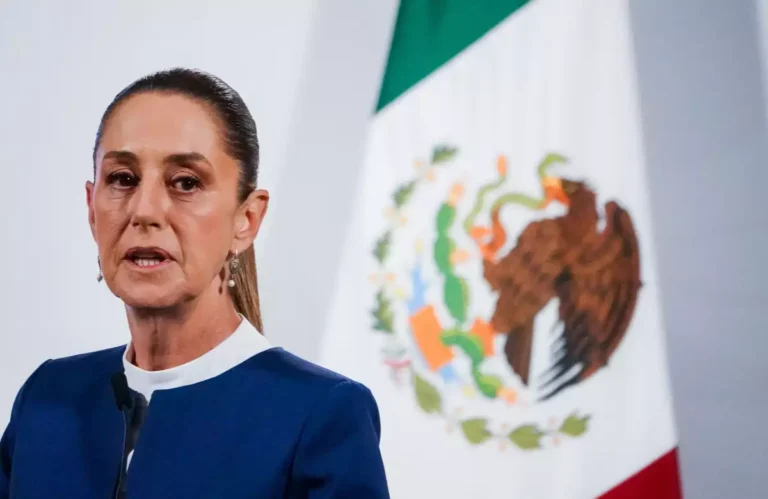
Claudia Sheinbaum’s arrival to the presidency of Mexico represents a new chapter in the complex and often tense relationship with the United States Drug Enforcement Administration (DEA).
RELATED:
Sheinbaum and Trump Agree to 90-Day Delay on U.S. Tariff Hike for Mexican Goods
After a six-year term marked by the “hugs, not bullets” policy and a firm defense of national sovereignty against foreign interference, the new government faces the great challenge of defining its own effective security strategy.
The question is whether Sheinbaum will maintain the critical distance that characterized her predecessor, Andrés Manuel López Obrador (AMLO), or if she will seek closer cooperation with an agency that has historically generated friction and questions about respect for Mexican sovereignty.
Historical Context and Recent Tensions Between Mexico and the DEA
To understand the current and future relationship between Mexico and the DEA, it is essential to review the historical context. The global increase in drug trafficking and consumption, especially cocaine and fentanyl (the latter in its illegal, non-medical use), has turned the issue into a public health crisis in the United States, a problem that inevitably impacts Mexico due to its role as a border country and main corridor for these substances.
The DEA is responsible for controlling and reducing drug trafficking in the United States. However, its strategy also includes extraterritorial actions that involve bilateral cooperation with other countries, Mexico is one of its key partners.
This relationship depends largely on both the US and Mexican governments and is primarily characterized by intelligence sharing and coordination with Mexican national agencies.
Although Mexico has a legal framework that limits and regulates the actions of foreign agents on its territory, there have been incidents that have strained this relationship. The most emblematic case occurred on October 15, 2020, when General Salvador Cienfuegos Zepeda, former Secretary of National Defense during the term of Enrique Peña Nieto (2012-2018), was arrested at Los Angeles airport at the request of the DEA.
Cienfuegos was accused of crimes linked to drug trafficking and money laundering, which provoked a strong reaction from AMLO’s government.
President López Obrador publicly expressed his displeasure, and through the Ministry of Foreign Affairs and the Attorney General’s Office (FGR), he pushed intense diplomacy to demand that the general be handed over to Mexico and tried on national soil.
This episode triggered a discussion about sovereignty and international cooperation on security and led to important reforms in Mexico’s National Security Law, which now requires any foreign agent to inform Mexican authorities of their activities and obtain explicit authorization to operate in the country.
Sheinbaum and the Course of Security Policy and Cooperation with the U.S.
With Claudia Sheinbaum’s presidency, attention both in Mexico and Washington is focused on the potential continuity or change in the national security strategy and cooperation with the DEA.
Sheinbaum has expressed her intention to attack the structural causes of violence in Mexico, which would include policies oriented toward social justice and development, in line with the Fourth Transformation she inherited from AMLO.
In recent statements, Sheinbaum emphasized that so far there is no formal agreement with the DEA and that what is currently being worked on between Mexico and the United States is a security agreement “based on sovereignty, mutual trust, territorial respect, and coordination without subordination.”
This agreement is being coordinated by the Ministry of Foreign Affairs and has the priority of preserving Mexico’s independence and autonomy.
Likewise, the president mentioned that she maintains direct communication with U.S. President Donald Trump but insisted that there is no signed agreement with the DEA, only Mexican participation in training courses in Texas organized by Mexico’s Secretariat of Security and Citizen Protection.
However, any rapprochement with the DEA or U.S. agencies will have to be carefully balanced with the sovereigntist discourse of the Fourth Transformation.
The key for Sheinbaum will be to define whether the DEA will be seen as an indispensable ally in the fight against drug trafficking or as an external actor whose actions must be strictly controlled and limited to protect national sovereignty.
The Inevitable Points of Friction in the Bilateral Relationship
Despite the interest in seeking agreements, the relationship between Mexico and the DEA will face several thorny issues that could generate new conflicts:
- Extradition of Drug Lords: The United States often pressures to extradite drug lords to its jurisdiction, seeking to try them in U.S. courts. In contrast, the Mexican government might choose to prioritize internal judicial processes, a stance that includes protecting the country’s legal and judicial sovereignty and which has been a central tenet during the current and previous governments.
- Intelligence Sharing and Use: Mutual trust remains one of the biggest obstacles to smooth cooperation. After episodes like the detention of General Cienfuegos, reactivating reliable and transparent intelligence channels will require specific diplomatic and technical work to prevent leaks or abuses.
- The Role of the National Guard: The growing militarization of Mexican security forces is a concern both inside and outside the country. In the United States, the DEA and other agencies might seek more direct, on-the-ground collaboration with Mexican military bodies. This could clash with the political vision of Sheinbaum and her government, which attempts to balance security with democratic principles and human rights.
A Perspective from the Left: Social Justice and Sovereignty are Key to Security
From a progressive and leftist viewpoint, the solution to the structural problem of drug trafficking and associated violence in Mexico does not lie in more militarization or greater interference from foreign agencies like the DEA.
The fentanyl and opioid crisis in the United States is a complex problem that requires a comprehensive approach, focused on correcting the social inequalities that fuel both the supply and demand for drugs: poverty, lack of access to education, unemployment, and marginalization.
Historically, greater intervention by the DEA on Mexican soil has not yielded concrete results in reducing the flow of illicit substances. On the contrary, it has been perceived by broad popular sectors and progressive groups as a threat to national sovereignty and the security of local communities, whose peace is disrupted by “war on drugs” policies.
Therefore, the fundamental challenge for Claudia Sheinbaum’s administration is not simply to intensify cooperation with the DEA, but to build a security policy that prioritizes social justice, local development, and collective well-being. Only in this way can the structural violence and the failures of traditional policy, which has left thousands of victims over decades, be truly overcome.
Conclusion: Sovereignty, Cooperation, and a New Security Paradigm
The debate over sovereignty and cooperation with the United States on security is one of the most important that Mexico faces today. Claudia Sheinbaum’s administration has the opportunity to articulate a strategy that defends national autonomy but also recognizes the importance of international collaboration, always under terms of mutual respect and without subordination.
Beyond official rhetoric, the great challenge is to reframe the security approach from a perspective that encompasses the social and political causes of violence, guarantees the protection of human rights, and leaves behind the punitive and militarized policies of the past.
This will be the thermometer to measure not only the success of the Fourth Transformation in matters of security but also its capacity to lay the foundations for a more just, sovereign, and peaceful Mexico.
Author: Silvana Solano
Source: TeleSur